Science Behind The Massive Turkey Earthquake!
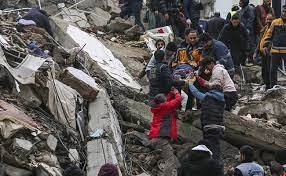
Description
A significant earthquake of magnitude 7.8 hit south-central Turkey and northwest Syria, resulting in more than 12,000 fatalities and several hundred injuries.
Many are still under the rubble, and more than 2,000 people are hurt. Turkey has issued a Level 4 alert requesting assistance from outside; according to reports, the United States, European Union, Russia, and Azerbaijan have already sent help. The depth of the damage is still not conclusive as rescuers hunt beneath the rubble and weird web videos of children and people getting rescued from there. Turkey's chilly and wet weather and the millions of refugees from Syria's ten-year civil conflict hinder rescue operations.
The U.S. Geological Survey estimates the earthquake's focal depth to be 18 kilometers. According to the USGS, the region includes many structures made of fragile concrete, making them particularly sensitive to earthquake shaking.
But what makes Turkey a hotbed of seismic activity?
Syria and Turkey are both located in an area with active earthquakes. The earthquake's epicenter was the Anatolia tectonic block, a well-known seismic fault line that spans northern, central, and eastern Turkey. It is a seismically active area, albeit not like the Himalayan region. It is one of the most earthquake-prone locations in the world. Earthquakes often shake Turkey. There were nearly 33,000 earthquakes in the area in just 2020.
It was an unfortunate disaster that severely shook Turkey. So, it calls for safety applications like POTP to manage the after-effects of such disasters. These secure and unique reporting platforms make sending incident reports easy with 24*7 monitoring agents. With a click of a button, these safety apps can work wonders and save people's lives.
